This bluetti solar generator ac180 review looks at a 1,152Wh portable power station built around quick recharging, 1,800W output, and optional solar input.
It can suit both campsite use and a home backup plan, provided its capacity and appliance limits match what you need to run.
BLUETTI AC180 Review Summary
The quick verdict
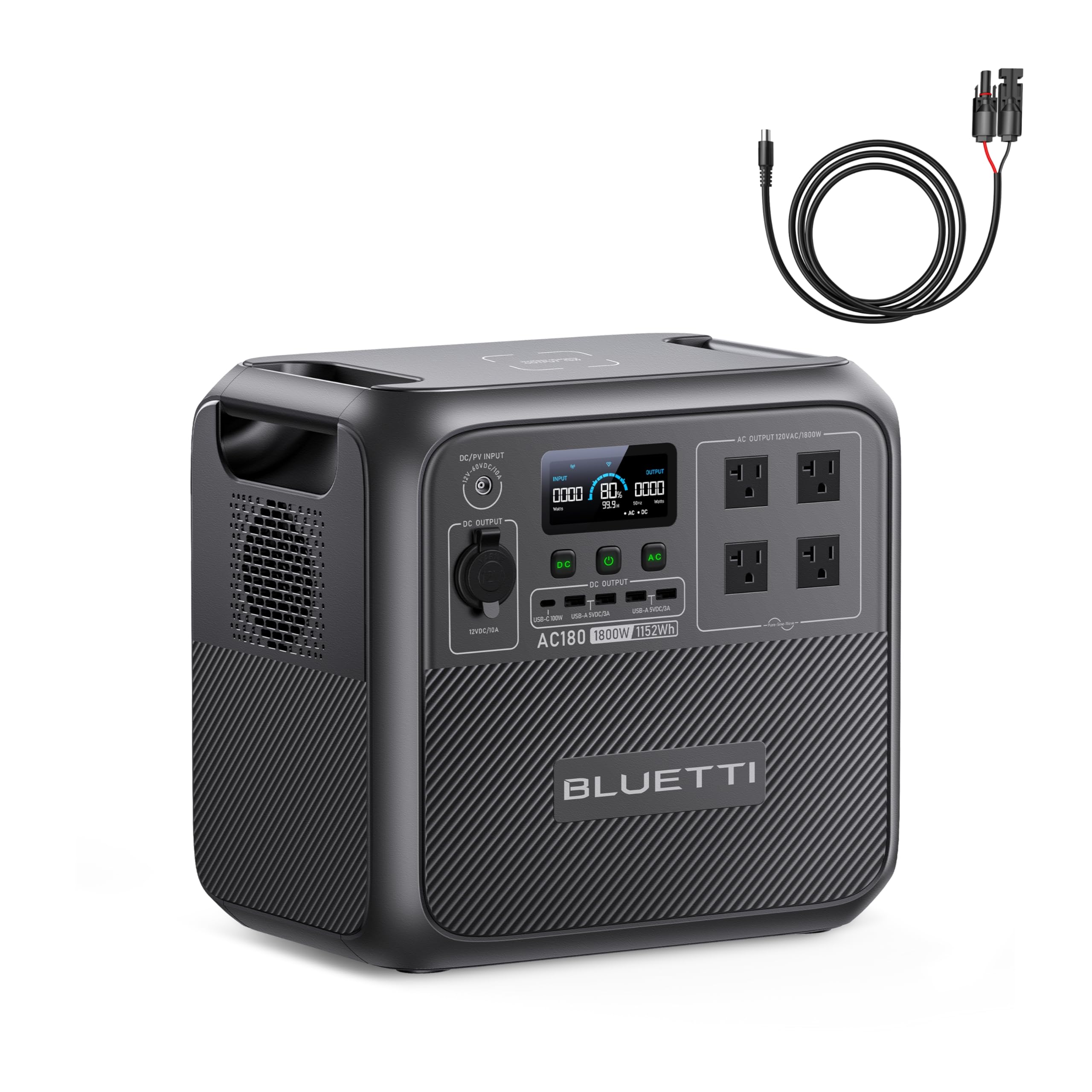
2,000+ ratings
Read Amazon ReviewsBLUETTI AC180
The BLUETTI AC180 suits campers and households seeking substantial portable capacity, fast AC charging, and solar input for essential devices.
- 1,152Wh LiFePO4 battery capacity.
- Rated 1,800W output, with an app-enabled boost described up to 2,700W.
- AC charging input up to 1,440W, with a stated full recharge time of about one hour.
- Built-in MPPT charge controller with up to 500W solar input; the described solar recharge estimate is 2.8–3.3 hours.

Pros
- A 1,152Wh battery offers more capacity than compact power banks and small stations.
- Fast AC charging can make it practical to recharge between trips or before a forecast outage.
Consider before buying
- The 1,800W rated output places a firm planning limit on simultaneous AC loads; check appliance labels and startup requirements before relying on it.
- Solar recharge depends on panel compatibility and real-world sunlight, so the stated time should not be treated as guaranteed.
Read the full review summary
The AC180 combines a sizable 1,152Wh LiFePO4 battery with 1,800W output and a claimed full AC recharge in about an hour when using 1,440W input.
Its built-in MPPT controller accepts up to 500W of solar input, giving owners a path to recharge away from an outlet when compatible panels and suitable sunlight are available.
The mix of AC, car, and solar charging, along with multiple outlets and a 20 ms UPS feature, makes it a flexible option for camping and short-duration backup of selected essentials.
It is still a battery station rather than a whole-home solution: choose it based on the devices you plan to power, their combined draw, and how long you need them to run.
The buying factors
BLUETTI AC180 Scorecard
Editorial scores reflect listed features and buyer fit; they are not laboratory measurements or customer ratings.
Battery capacity
The 1,152Wh capacity is substantial for a portable station and supports more than small-device charging, though runtime depends on the load.
AC output
A rated 1,800W output gives it a useful range for appliances and gear within that limit; the app-enabled boost is specified up to 2,700W.
AC recharge speed
The described 1,440W AC input and approximately one-hour full-charge claim are strong conveniences when a wall outlet is available.
Solar flexibility
The built-in MPPT controller and up to 500W input support solar recharging, but actual time depends on conditions and panel setup.
Backup readiness
A 20 ms UPS switchover is useful for selected essentials, though buyers should confirm their equipment can tolerate that transition.
Portability and versatility
AC, car, and solar charging broaden where it can be used, while its capacity-focused design is best chosen around planned transport and storage.
Key Features and Specifications of BLUETTI AC180
- 1,152Wh LiFePO4 battery capacity.
- Rated 1,800W output, with an app-enabled boost described up to 2,700W.
- AC charging input up to 1,440W, with a stated full recharge time of about one hour.
- Built-in MPPT charge controller with up to 500W solar input; the described solar recharge estimate is 2.8–3.3 hours.
- UPS function with a stated 20 ms switchover for selected backup uses.
- Charging options include AC, car, and solar; the package includes AC, car, and solar charging cables.
Pros and Cons of BLUETTI AC180
Pros
- A 1,152Wh battery offers more capacity than compact power banks and small stations.
- Fast AC charging can make it practical to recharge between trips or before a forecast outage.
- Solar input is built in, with up to 500W supported through the MPPT controller.
- The 1,800W rated output and app-enabled boost provide flexibility for compatible loads.
- A 20 ms UPS function adds a potential role for selected home essentials.
Consider before buying
- The 1,800W rated output places a firm planning limit on simultaneous AC loads; check appliance labels and startup requirements before relying on it.
- Solar recharge depends on panel compatibility and real-world sunlight, so the stated time should not be treated as guaranteed.
- The product description does not give a weight or dimensions, so buyers who need frequent carrying should confirm the unit’s handling and storage fit before choosing it.
Who Should Buy BLUETTI AC180?
Good fit
Consider the AC180 if you want a portable station that can handle a mix of camping gear, electronics, and selected household essentials.
Its battery capacity is the central appeal, while the fast AC recharge helps when you can return to a wall outlet between uses.
Check the wattage of each device and decide which items need to run together; the rated output is more useful as a planning guide than a broad promise that every appliance will work.
It also makes sense for buyers who want to build solar charging into an outage or off-grid routine.
The MPPT controller accepts up to 500W, and the included solar cable helps with setup, but you will still need a compatible panel arrangement.
If UPS use matters, identify the exact electronics you want to protect and consider whether a 20 ms switchover fits their requirements.
The best use case is a defined set of loads rather than an assumption that one portable battery can run an entire home.
Map expected watts and hours, then leave margin for devices that cycle or draw more power at startup. That simple check helps determine whether the AC180’s capacity and output are a good match.
Who should skip it
Skip it if your priority is uninterrupted power for high-draw appliances or whole-home coverage. The stated 1,800W rated output and 1,152Wh capacity call for selective load planning, and the product description does not establish whole-home operation.
Look elsewhere if you need a confirmed lightweight unit for frequent long-distance carrying. Since the product details here do not specify weight or dimensions, verify those practical fit details before purchasing.
How the BLUETTI AC180 Fits a Portable Backup Plan
Capacity and runtime planning
A 1,152Wh battery gives the AC180 room to support more than phones and small electronics, but capacity alone does not determine runtime.
Add up the expected draw of the devices you will use and estimate how many hours they need to stay on; higher loads will use stored energy sooner.
This is especially useful when choosing between powering one appliance for longer or several essentials at once.
Output limits and the app boost
The 1,800W rated output is the practical figure to use when checking appliances and simultaneous loads.
The description also specifies an app-enabled boost up to 2,700W, but buyers should treat that as a feature with a particular use case rather than assume every device can run at that level.
Check both running and startup requirements for equipment with motors or heating elements.
Recharge choices for home and outdoors
AC charging is the clearest route when speed matters: the product description pairs up to 1,440W input with an approximately one-hour full recharge.
Away from a wall outlet, the built-in MPPT controller accepts up to 500W solar input, with a stated 2.8–3.3-hour estimate.
Actual solar input and charge time will depend on conditions, panel setup, and how much energy the station needs.
What the UPS feature can contribute
A stated 20 ms switchover can make the station relevant for selected home electronics during an interruption. That timing is a design feature, not a guarantee that every computer, router, or other device will stay online without interruption.
Check the tolerance of the equipment you plan to connect and test the arrangement before depending on it for important work.
Alternatives to BLUETTI AC180
Outdoor Generators alternative
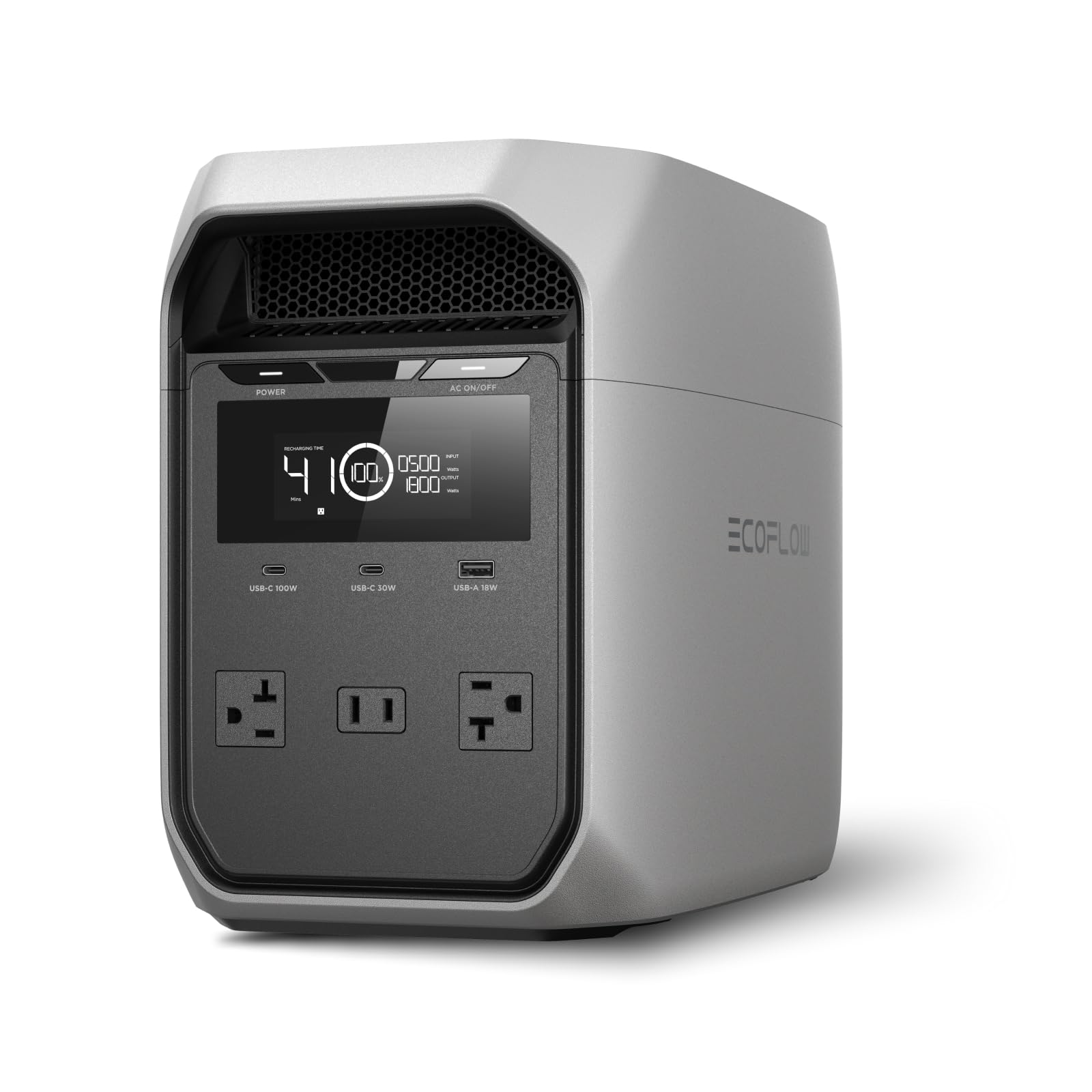
1,000+ ratings
Read Amazon ReviewsEcoFlow DELTA 3 Classic
Choose the AC180 if its larger stated capacity and built-in MPPT solar input better match your plan.
Consider the DELTA 3 Classic if faster UPS switching, USB-C output, or its app features matter more, and compare its lower capacity against your runtime needs.
- The DELTA 3 Classic has 1,024Wh capacity and 1,800W output, with 3,600W surge power, 100W USB-C output, under-10 ms UPS switching, app controls, and optional 500W solar charging.
- The BLUETTI AC180 has a 1,152Wh battery, 1,800W rated output, up to 500W solar input, and a stated 20 ms UPS switchover.
Quick-charge alternative
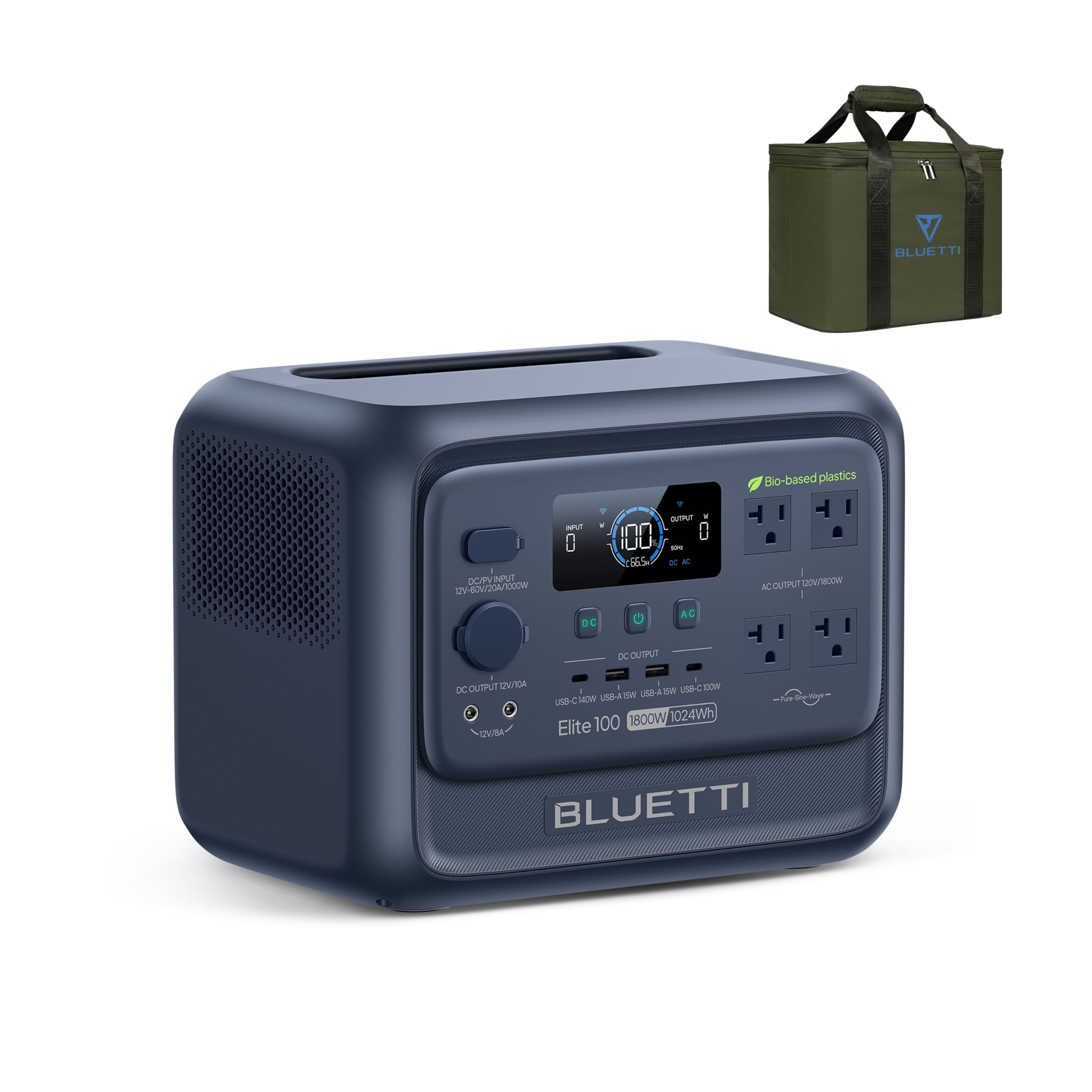
2,000+ ratings
Read Amazon ReviewsBLUETTI Elite 100 V2
Consider the Elite 100 V2 if carrying weight and compactness are priorities and its slightly smaller capacity fits your load plan.
The AC180 is the more capacity-focused choice on the supplied specifications, while the Elite has a stated portability advantage.
- The Elite 100 V2 has 1,024Wh capacity and 1,800W output, weighs 25 pounds, and is described as 35% smaller and 30% lighter.
- Its stated fast-charge options include up to 1,000W solar or 1,200W AC input.
- The AC180 offers 1,152Wh capacity and up to 500W solar input, with AC, car, and solar charging options described.
Is BLUETTI AC180 Worth It?
The BLUETTI AC180 is worth considering if you want a substantial portable battery with quick AC recharging, solar input, and enough rated output for a planned set of essential devices.
Its strongest case is versatility across camping and selective home backup.
Before buying, check appliance wattage, expected runtime, solar-panel compatibility, and the unit’s weight and dimensions for your setup.
If those details align with your needs, the AC180 presents a capable middle ground between small device chargers and a fixed backup system.
Your review at a glance
2,000+ ratings
Read Amazon ReviewsBLUETTI AC180
The BLUETTI AC180 suits campers and households seeking substantial portable capacity, fast AC charging, and solar input for essential devices.
- 1,152Wh LiFePO4 battery capacity.
- Rated 1,800W output, with an app-enabled boost described up to 2,700W.
- AC charging input up to 1,440W, with a stated full recharge time of about one hour.
- Built-in MPPT charge controller with up to 500W solar input; the described solar recharge estimate is 2.8–3.3 hours.